
Still Christendom
What Tom Holland's Dominion revealed about the world we think we've moved past

I walked into Kane Hall at the University of Washington as a pre-med student back almost 20 years ago.
600 of us crammed into that lecture hall for Chem-142. It was, by design, a weed-out class — the university’s polite and efficient way of separating the truly called from the merely interested. I was merely interested. I knew it within weeks. I withdrew before the quarter ended.
The next few weeks were uncomfortable in the way that only directionless early adulthood can be. I had a future to figure out and no map. So I did what you do: I looked back. I scanned my high school years for any signal of genuine joy, any class where I wasn’t watching the clock.
There was one.
History.
Not because I loved memorizing dates but because a good history class does something no other class did very well. History tells a story. It answers the questions I actually cared about: Why are things the way they are? Where did we come from? Where are we going? It treats the past not as a museum but as a mirror.
Even though I wanted to become a professor and study professionally those early plans didn’t pan out as I hoped. Life went a different direction. But that excitement — that feeling in the pit of the stomach, the sense of uncovering a gold nugget of insight as if I pulled out an actual gold nugget from the American River in Sacramento during the Gold Rush era — never fully left.
Tom Holland gave it back to me.
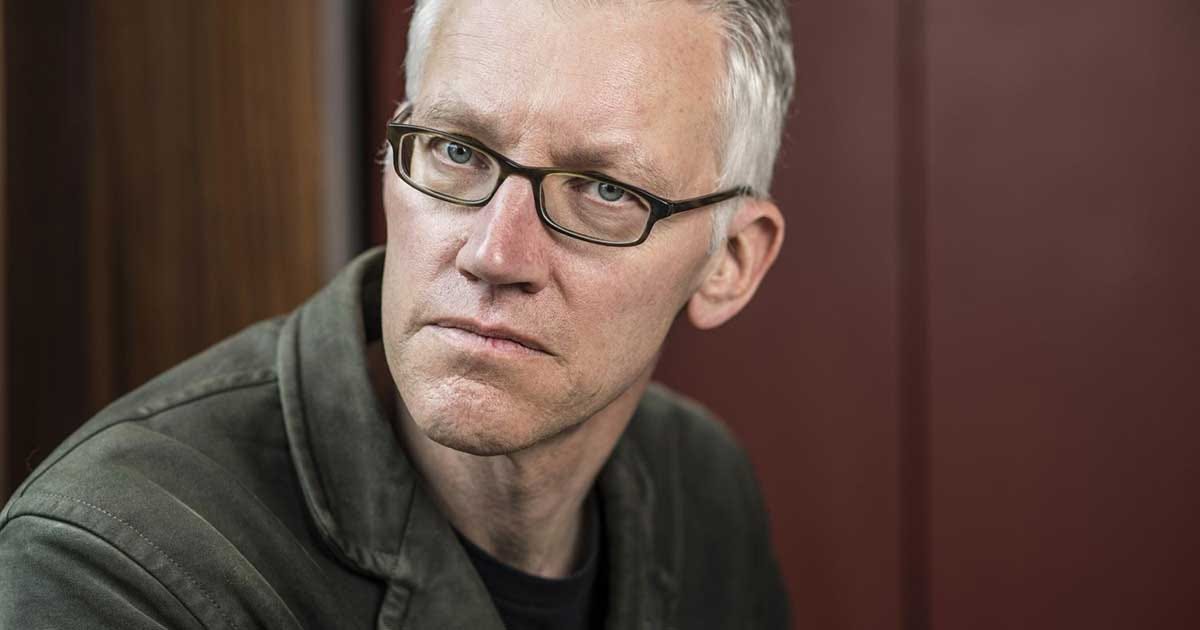
Dominion is a history of Christianity spanning more than two thousand years, and Holland is exactly the right kind of historian to tell that story. He doesn’t just recount facts and dates. He tells a story — with a beginning, a middle, and an end. With a theme. With the kind of narrative architecture that makes you feel, by the last page, that you’ve been somewhere. Every chapter is beautifully architected.
Storytelling, he demonstrates, is as much about what you leave out as what you include. And it’s breathtaking — the dots he chose to connect, the constellations he drew with them, the story those constellations tell.
One chapter in particular was especially masterful. It began with the Beatles and ended with Jihadi John and the ‘Beatles’ of the Islamic State. I’ll leave it there. Just know: it is remarkable. Holland at his absolute best.
Here is the primary thing Holland solidified for me — something I had known and heard before, from podcasters, social commentators, historians, even politicians. I had always believed it was true. But Holland made it feel like new information. Like I was hearing it for the first time.
Everything in the modern world is a derivative of Christianity.
Not just the church. Not just theology. Everything. The notions of hetero- and homosexuality. Marriage. The idea of religion itself. The concept of the sacred and the secular as distinct categories. Natural law. Science. Atheism. Progressivism. Civil and human rights. Universities. The very grammar of our moral imagination — the intuition that the poor matter, that power should be accountable, that every individual carries inherent dignity — all of it traces back to the words and ideas of a first-century Jewish carpenter executed outside Jerusalem.
Modernity wasn’t built in spite of Christianity. All of these ideas flowered from Christianity’s branches, full stop.
What Holland does, and does brilliantly, is show how. Not as a polemic. Not as apologetics. As a historian. He follows the ideas through Augustine and Aquinas, through the Reformation, through the Enlightenment, through abolition and universal suffrage and the United Nations Declaration of Human Rights and he shows you the root system underneath it all.
Sometimes we are so deep inside the forest of our own age that we forget how the forest got here.
I found myself, reading Holland, strangely comforted. Seen, almost. There is something settling about understanding the context of why we are where we are. And watching the words of Jesus move through centuries of human imagination, inspiring action, overturning power, haunting even its enemies.
Yesterday (which happened to be Memorial Day) I sat around a table with a group of guys. We talked for a long time about the world as it is right now. Global geopolitics. Wars and rumors of wars. The decrepitation of Europe. America flexing. New alliances forming in the shadows. Secret pacts. Uncertain futures. World War 3.
And I could help but think about Holland’s concluding thoughts: we still live in Christendom.
Not in the medieval sense. Not in the Christendom of crusades and cathedrals and state churches. But in the sense that Holland means: the world we inhabit, the arguments we make, the rights we claim, the injustices we name — they are all downstream of the revolution that began in a manger and culminated on a cross.
The kingdom of heaven is still at hand. Still pressing. Still converting. The inaugurated kingdom of heaven is still ever dawning.
Which brings me to Chesterton, who, in my opinion, saw all of this more clearly than almost anyone. In The Everlasting Man, he wrote:
”Christendom has had a series of revolutions and in each one of them Christianity has died. Christianity has died many times and risen again; for it had a God who knew the way out of the grave.”
And then, a few lines later:
”The Faith is always converting the age, not as an old religion but as a new religion.”
I don’t know exactly what that looks like right now. I don’t know what Holland’s next chapter would be titled — the one we are living in — or which dots he would connect, or what constellation would emerge.
But I believe the story isn’t over.
It never is.
Do yourself a favor and pick up Dominion or listen to it on audible.